L.A. Grit, Determination, Resilience, and Destiny — Let Me Introduce You to Go Betty Go
L.A. Grit, Determination, Resilience, and Destiny — Let Me Introduce You to Go Betty Go
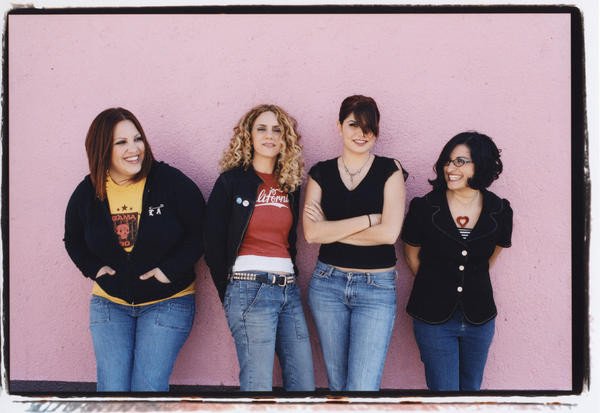
A band doesn’t survive two decades in the Los Angeles punk scene without grit, but Go Betty Go didn’t just survive—they carved out a legacy with their bare hands. Born in Glendale in 2000, the all‑female quartet—Nicolette Vilar on vocals, Betty Cisneros on guitar, Aixa Vilar on drums, and Michelle Rangel on bass—rose from the heart of the Southern California Chicano punk movement with a sound that felt like a spark hitting gasoline. Fast, melodic, unfiltered, and emotionally urgent, their music didn’t ask for permission. It demanded to be heard. And if I’m being honest, Go Betty Go isn’t just another band to me—they’re one of my all‑time favorites. Give them a real listen, and they’ll become one of yours too.
Their beginnings were as raw and DIY as punk itself. The band name came from a chant the others would yell to push guitarist Betty Cisneros to kick off a song—a moment of encouragement that became a mission statement. They signed with SideOneDummy Records and released their debut EP, Worst Enemy, in 2004, followed by Nothing Is More in 2005, produced by Ted Hutt of Flogging Molly. These records captured something rare: a perfect collision of speed‑punk ferocity and melodic vulnerability. Their songs held their culture close, yet reached far beyond it, proving that whether they were singing in Spanish or English, great music always transcends borders, languages, and expectations.
For any punk band of the early 2000s, the Vans Warped Tour was both a battlefield and a rite of passage. Go Betty Go hit the tour in 2004 and 2005, stepping into the sun‑scorched chaos of dusty parking lots, endless merch tents, and crowds hungry for something real. And real is exactly what they delivered. Their sets were explosive—tight harmonies, blistering guitar lines, and a stage presence that made even veteran acts take notice. They didn’t just hold their own; they stole the show.
Their performances on the Shiragirl Stage—a platform created to spotlight female artists in a scene that often pushed them to the margins—became the stuff of Warped Tour lore. Fans who saw them there still talk about it with the kind of reverence usually reserved for life‑changing concerts. Go Betty Go didn’t just play; they made people believe.
But punk isn’t punk without pain, and just as their momentum crested, everything fractured. In 2006, lead vocalist Nicolette Vilar left abruptly, forcing the band to cancel tour dates and sending them into emotional and creative freefall. Emily Valentine stepped in with power and grace, but the original chemistry—the lightning‑in‑a‑bottle magic—was impossible to replicate. By 2007, bassist Michelle Rangel also departed. Phil Buckman of Filter and Fuel stepped in on bass, adding depth and professionalism, but fans couldn’t shake the ache for the original four. The longing was palpable, almost communal.
Then, in 2012, something extraordinary happened. On an unassuming weeknight at the now‑closed Howl At The Moon bar at Universal City Walk, I witnessed a moment that felt like destiny snapping back into place. Aixa, Betty, Nicolette, and Michelle walked onto the stage together again. The room shifted. The air changed. When they played, it wasn’t nostalgia—it was resurrection. Their 2015 Reboot EP, once again produced by Ted Hutt, wasn’t just a return; it was a declaration: We’re still here. We’re still us.
Just as they began reclaiming their place as one of L.A.’s most vital rock acts, tragedy struck. In 2022, guitarist Betty Cisneros was diagnosed with Stage 4 colorectal cancer. For a musician whose hands were her voice, the numbness that followed was devastating. Playing guitar became nearly impossible. Yet even in the darkest moments, the band refused to let go of her or the music. They continued performing with a touring guitarist, carrying Betty’s spirit with them on every stage. And in true Go Betty Go fashion, Betty fought back, sharing her journey to recovery with fans, friends, and family on social media. Today, clear scans point toward a future as bright as her tone once was.
Go Betty Go’s spirit has always been rooted in sisterhood, family, and the relentless belief that music is worth fighting for. They book their own tours, design their own merch, and handle their own PR—not because they have to, but because it’s who they are. Their journey hasn’t been smooth, but that’s exactly why it matters. They’ve lived the truth that punk isn’t just a sound—it’s survival.
Their story is still unfolding, and so is their music. And if their past is any indication, the next chapter will be just as fearless. For new fans, it’s a great time to visit classics like You’re Worst Enemy, Son Mis Locuras, and for older fans who need a distraction from life’s responsibilities and want to connect with everything great about the early 2000’s try listening to newer tracks like Keep Up, and We Talk A Lot.