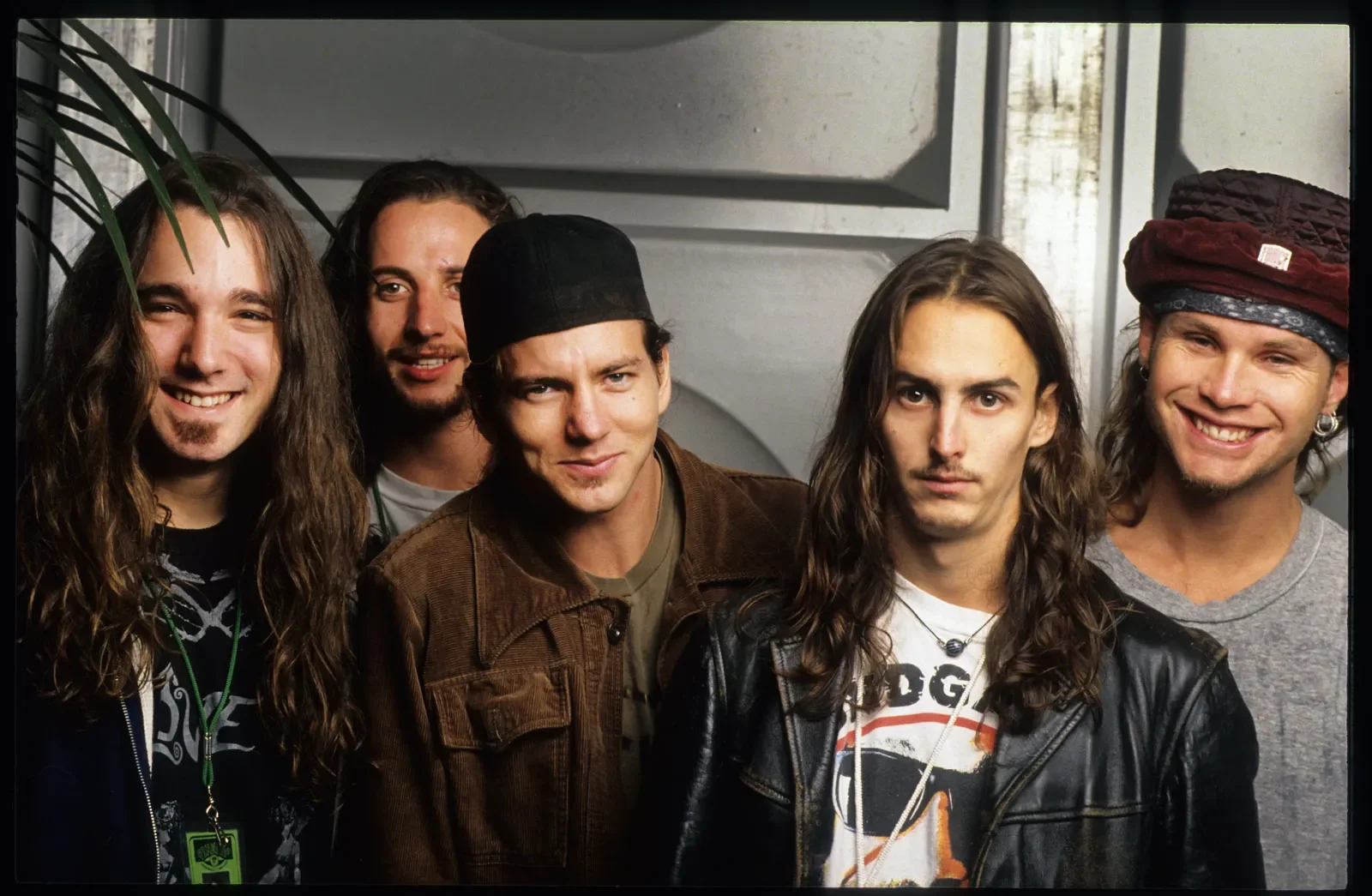
The Soul That Wouldn't Stay Quiet: The Unstoppable Rise of Pearl Jam’s "Black"
The Soul That Wouldn't Stay Quiet: The Unstoppable Rise of Pearl Jam’s "Black"
There’s a specific kind of silence that only exists in a teenager's bedroom in 1992. It’s the silence between the end of a phone call and the beginning of a heartbreak. For many of us, that silence was filled by the low, mournful hum of a cassette tape or compact disc—specifically, the five minutes and forty-three seconds of Pearl Jam’s "Black."
It wasn't a radio single. There was no flashy MTV video with high-contrast filters to tell us how to feel. Instead, "Black" was a secret we all discovered at exactly the same time, a subterranean river of grief that eventually flooded the mainstream simply because it was too powerful to be contained.
Listening to “Black” for the first time felt less like hearing a song and more like eavesdropping on a confession. Or a prayer. It wasn’t just heartbreak; it was an anatomy of it. While the rest of Ten surged with layered guitars and stadium-sized ambition, “Black” felt like the lights had been dimmed without warning. The opening notes arrive not as a riff, but as a wound—Mike McCready’s guitar weeping instead of announcing itself. No bombast. No warning. Just the sense that something fragile had been set down in front of you, and that you needed to handle it carefully.
I remember hearing it for the first time without knowing where it was headed. I didn’t know how brutally it would unfold. I only knew, within seconds, that it was reaching for something already living inside me. Something unspoken.
Eddie Vedder doesn’t sing “Black” so much as survive it. His voice carries the weight of someone discovering, in real time, that happy endings aren’t guaranteed. There’s restraint early on, but by the final verse, that restraint collapses. What follows isn’t melodrama—it’s inevitability. A man breaking under the realization that love doesn’t always mean permanence, and that some losses don’t come with lessons or closure.
The “explosion” of “Black” wasn’t manufactured. It was organic. Epic Records reportedly pushed hard for it to be released as a single, recognizing its massive commercial potential. The band refused. They didn’t want heartbreak turned into a product. They didn’t want pain smoothed down for radio rotation.
But Pearl Jam fans—already carrying their own private wreckage—had other ideas.
“Black” became the cornerstone of every I miss you mixtape, every late-night drive, every bedroom floor confession. It drifted through high school hallways like a ghost, passed hand to hand, shared without explanation. Radio programmers, sensing the undeniable groundswell, began playing the album track anyway. It climbed the charts without a marketing campaign, powered entirely by people who needed it.
And then there were the live performances.
What began as an intimate slow burn transformed, night after night, into something overwhelming. The quiet ache of the studio version gave way to a collective release—a mass exorcism. Thousands of voices screaming the same lyrics back at the stage, not in celebration, but in recognition. In those moments, people who felt invisible in their daily lives were suddenly seen, bound together by shared loss.
For every young person who had ever felt alone and hollow, there was the sight and sound of ten thousand others crying through the same bridge in a darkened arena. And somehow, without anyone saying it out loud, they all understood: I’m not the only one. I’m going to survive this.
The genius of “Black” is that it never ages, because grief doesn’t. We don’t outgrow it—we carry it. We all have that “star in somebody else’s sky.” We all have those “sheets of empty canvas” that never got painted. Love leaves marks whether it lasts or not.
By refusing to sell the song, Pearl Jam unintentionally gave it something rare: a soul that could never be worn thin by overexposure. “Black” remained ours. Not owned, not packaged, not diminished. An underground hit that became a legend, fueled not by promotion but by every tear shed in a dark bedroom and every unanswerable why whispered into the night.
And maybe that’s why, decades later, it still hits the same. Because “Black” doesn’t promise healing. It doesn’t offer solutions. It simply sits with you in the wreckage and says what so few things ever do:
This hurts. And you’re not wrong for feeling it.