Inside the Quiet Storm- How “Nutshell” Became Alice in Chains’ Most Human Confession
Inside the Quiet Storm: How “Nutshell” Became Alice in Chains’ Most Human Confession
Some songs enter our lives loud, undeniable, impossible to ignore. Others arrive the way grief does: quietly, slowly, without ceremony.
Alice in Chains’ “Nutshell” barely even whispers; it exhales. And in that soft, trembling breath, it has spent more than three decades binding itself to listeners in one of the most intimate exchanges rock music has ever offered.
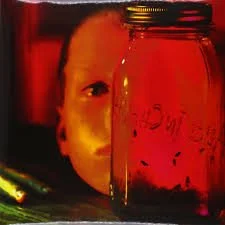
“Nutshell” appears early on Jar of Flies, the band’s 1994 acoustic EP, arriving as the second track and emotional axis. At 4 minutes and 19 seconds, it is brief, but nothing about it feels small. Every note is a pulse. Every lyric is a wound left uncovered. Written and recorded in a single week at London Bridge Studio, the EP surprised everyone, including the band. And while it became the first EP to debut at No. 1 on the Billboard 200, “Nutshell” never charted, never campaigned for attention, never asked for anything at all.
It simply existed. And somehow, that was enough to change people.
When “Nutshell” begins, the air shifts.
Conversations taper off.
The world seems to dim around the edges.
The song doesn’t demand silence; it creates it. Its acoustic bones leave no shadows to hide in, and that nakedness becomes an invitation. It’s as if the music gently opens a door inside you, maybe one you’ve kept locked for years, and says, It’s okay. You can feel this now.
The opening chords move like a slow confession. The bassline hums like a heartbeat trying to steady itself. And Layne Staley’s voice, fragile, frayed, impossibly human, doesn’t rise so much as it leans forward, carrying the weight of a man who has run out of disguises.
As listeners, we don’t just hear “Nutshell.”
We enter it, and it does the same in return. It becomes a place where our own unspoken truths can finally unclench. With every listen, the song stops being about Layne’s loneliness and becomes more of a mirror for our own.
For anyone who grew up in the 90s, the 1996 MTV Unplugged performance is carved into memory. “Nutshell” opened the set, and Layne sat there, small, pale, visibly worn down by life. When he sang, something ancient and aching rose out of him. His voice carried both surrender and defiance, the sound of a man who had been fighting storms no one else could see.
Watching it now feels like watching someone speak their truth for the last time. And in a way, it was. It was the final performance of “Nutshell” with him, and that knowledge has only deepened the song’s gravity. It’s no longer just a performance; it’s a farewell letter written in real time.
“Nutshell” endures because it recognizes us. It knows the shape of loneliness. It knows the weight of pretending. It knows the quiet ache of wanting to be understood without having to explain yourself.
This is the song people return to when they’re grieving, when they’re rebuilding, when they’re lost in the fog of identity, when the world feels too sharp or too loud. It’s the soundtrack to late-night drives, to silent breakdowns, to mornings when you stare at your reflection and don’t quite recognize the person looking back.
The lyrics don’t guide you; they sit beside you. They don’t offer answers; they offer honesty. And we can just hope that honesty becomes a kind of release, an implosion that happens inwardly, without spectacle.
“Nutshell” doesn’t try to save you. It simply refuses to leave you alone in the dark.
This song is communion.
It’s the shared breath between strangers who have felt the same ache. It’s the unspoken understanding that being human is often unbearably heavy, fair or not, and yet somehow, we keep going. “Nutshell” doesn’t romanticize suffering; it acknowledges it with a tenderness that feels almost sacred.
Ultimately, “Nutshell” isn’t about despair as a destination. It’s about the courage it takes to admit you’re standing in it. It’s about the fragile beauty of saying, "This is where I am”, and the quiet relief of knowing someone else has been there too.
Its power lies in how little it asks of us, while giving us the space to feel everything we’ve been holding back. With every listen, “Nutshell” doesn’t transport us to a moment in history; it brings us back to ourselves.
It’s deep.
It’s painful.
It’s confession.
And above all, it is profoundly, devastatingly human.